
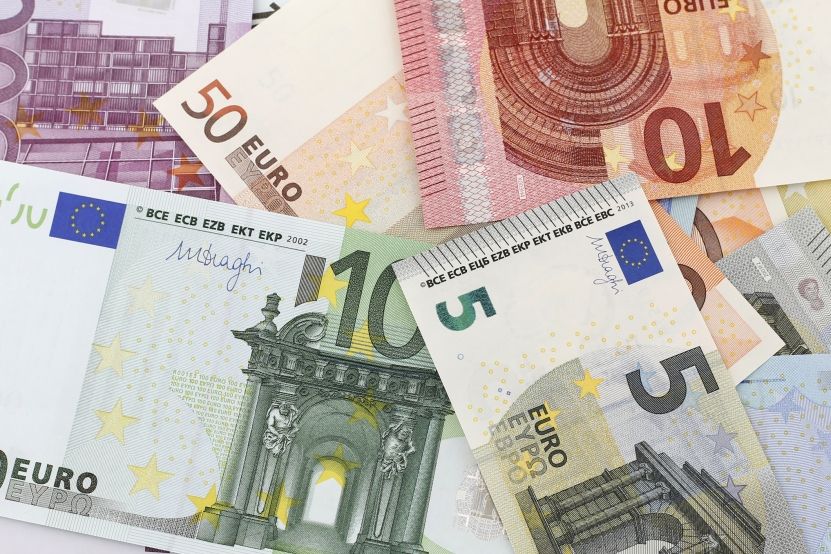




In an age of triumphant digital technology, mobile money, stablecoins and repeated promises of the end of cash, physical currency is often described as a relic of a bygone age or an anomaly doomed to extinction. But you only have to follow the life of a handful of banknotes and this narrative soon begins to fray.
Cash: a living archive of Europe
The narratives tracing the circulation of our cherished banknotes – shaped by their physical movement, everyday use and human stories – long remained invisible. Today they only exist thanks to EuroBillTracker1, a citizen-led project launched in 2002 when euro notes and coins first went into circulation, which tracks how our low- and high-denomination notes move around Europe and beyond.
Note after note, entry after entry, the site makes visible what macro statistics ignore: the social biography of money. EuroBillTracker (EBT) measures neither wealth nor institutional financial flows. Instead, it documents something else: how currency really circulates among individuals.
Every note tells a story
Documented by EBT, a five-euro note printed in France in 2002 has been registered on the site three times. After being printed at Chamalières, note number Uxxxx2428xxx was first logged in January 2015 at a tobacconist’s on Cours Victor Hugo in Bordeaux before popping up a second time in March 2016 at a market in La Balme-de-Sillingy, Haute-Savoie. It reappeared a few months later in June 2016 just a stone’s throw away in Annecy, without any real clue as to what it might have been spent on. It’s probably still somewhere in a retailer’s till, a wallet – maybe yours – or even a child’s piggy bank. This low-denomination note has probably never left French soil. In any event, it’s never been programmed, tokenised or authenticated by an electronic network. It’s simply been used to pay for small, day-to-day purchases.
Another note with the same face value, this time printed in Madrid in 2013, very quickly left Europe. It appeared in Tokyo in 2014, in the Akihabara district, a former electronics hub which, over time, has become one of the capital’s major cultural and commercial centres, also known for its specialist brands and manga culture: in short, a must-visit tourist destination. The note passed through a Travelex bureau de change and disappeared for a few years before resurfacing in Estonia in 2020. It was dispensed by a Swedbank ATM at a Circle K filling station in Tallinn. Its extraordinary journey came to an end in 2024 in an Austrian taxi in the heart of a district of Graz, capital of the state of Styria. Ultimately, according to EBT’s data, this Spanish banknote, number Vxxxx3041xxx, travelled some 9,368 kilometres in 3,674 days.
All these banknotes2 embody stories that our contemporary discourse about money no longer tells us. They speak to us of human movement, lingering slowness, fading from view, leaving and returning. EuroBillTracker acts as an archaeological tool, revealing the contemporary history of our currency.
A cultural melting pot
It’s tempting to pit physical currency against younger generations born into the digital age. But to do so is to forget something essential. Young Europeans born after 1 January 2002 – Generation Z – may not have known national currencies like the mark or the franc, but they grew up with euro notes crumpled in the jeans pockets of their parents, themselves born into a mobile generation swept up in the thrilling chapter of European integration that was the switch to the euro.
In the early 2000s, the euro wasn’t just a unit of account: it was an unprecedented tool for bringing people together. For the first time, generations from an entire continent could travel, consume, study, work and meet across a huge area, linguistically fragmented but monetarily unified. The same banknote let you travel from Paris to Berlin, live between Barcelona and Rome or venture from Rome to Athens without the need for mental conversion or any symbolic or technological break.
Euro cash was, in a very real sense, a tool for European socialisation. It joined Erasmus students on their adventures, rode along on train journeys, bought beers at festivals, rewarded those first jobs and seeded the first savings. Cash isn’t a legacy of the past that’s doomed to disappear; on the contrary, it’s a cornerstone of the cultural melting pot that is today’s Europe.
Cash to the rescue
Above all, the journeys tracked on EuroBillTracker show that in our societies, money doesn’t just move at the speed of digital networks, where immediacy rules. No: precisely because it’s cash, money still moves at the speed of markets, neighbourhood stores, human travels and everyday gestures. The comments linked to banknotes on EBT are a treasure trove. They tell of out-of-order ATMs, shortages of low-value notes and improvised payments. Ultimately, they document our monetary system’s physicality and local fragility, but above all its resilience. Where digital payments fail if networks go down, the banknote continues on, coming immediately to the rescue.
In an age when every electronic payment becomes data, every transaction is tracked, categorised and analysed, and currency is becoming conditional and programmable, cash retains a property that has become scarce: the ability to exchange value directly, without technical intermediaries or systematic records. This freedom, still accepted today, is anything but ideological. It is civil, practical and social.
Without cash, no sovereignty
In current debate, Europe’s monetary sovereignty is often projected into the future, with attention focused on issues such as the digital euro, payment infrastructure and technological dependencies. However, the recent experience of certain Northern European countries calls for caution, even outside the eurozone. Sweden, pioneer of the “cashless society”, has shifted policy since 2023, adopting resilience measures that require its central bank to guarantee access to cash and recommending that households keep some cash on hand to cope with crises. Norway (outside the eurozone like Sweden) is following a similar path, having introduced a requirement in 2024 for retailers to accept notes and coins as legal tender or face fines. The goal is to preserve security and inclusion. These examples fuel debate around preserving cash in the eurozone, reignited by Spain’s April 2025 blackout, when electronic transactions were blocked nationwide, highlighting the European economy’s critical dependence on digital technology.
Banknotes thus tell us something else too: euro cash is already an excellent foundation for sovereignty because it’s universally accepted, can be used offline and is physically globalised. EuroBillTracker shows that this sovereignty is not just a matter of institutional engineering but of circulation in real life.
The stories told by banknotes are not mere anecdotes: they’re a living archive of our societies. They remind us that money is not just a protocol, an interface or a mobile app on a phone; it’s a social fact embedded in bodies, journeys and generations. Perhaps the real question isn’t so much when cash will disappear but what it still tells us about ourselves.
Romain Liquard
1Created on 1 January 2002 by Philippe Girolami, joined in mid-2003 by Anssi Johansson, EuroBillTracker is a non-profit website designed to track euro banknotes put into circulation since 2002. It was inspired by the Where’s George? and Canadian Money Tracker websites, which track US and Canadian dollars respectively. EuroBillTracker has been managed by a non-profit, the European Association of Eurobilltrackers (A2E), since 2008.
2More than 27,579 notes are registered on EBT every day thanks to its community of 227,879 members. A total of 242,615,481 notes have been registered since the project began, with a cumulative total value of over €4.4 billion.