
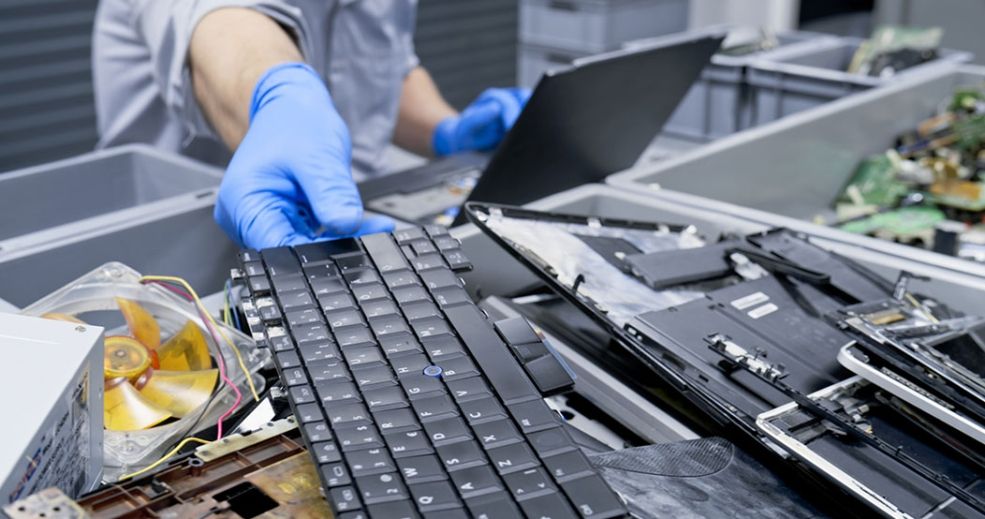
Reinforcing sobriety and reducing the environmental footprint



In addition to recycling, Crédit Agricole entities are attentive to sustainable purchasing and eco-design. To help boost the Group’s performance while creating value for the business lines while respecting its values and its environment, the Group has defined a genuine Responsible Purchasing Policy. Therefore, the purchases made must have the most positive environmental, social and economic impacts possible over the entire life cycle.
For example, the use of recycled paper is quite widespread. As a result, Crédit Agricole Ukraine has managed to reduce the carbon emissions associated with its consumption of exclusively recycled paper by 40%.
Entities and businesses are also attentive to the eco-design of their products and processes. As part of its responsible communication approach, the Group advocates the eco-responsibility of productions, all media combined.
CA-GIP favours the supply of second-hand equipment to its customers. In 2024, it involved one-third of the equipment purchased, including the purchase of 269 refurbished consumables, such as network cards and cables, as well as active equipment, including 825 Wi-Fi terminals, switches and routers. CA-GIP reduced its CO2 emissions (156 tons) by around 90% on its network purchases, equivalent to 175 Paris-New York flights.
The Regional Bank of Charente-Périgord makes computers available to its employees on the site of its refurbishment service provider. One year after the launch of this initiative, some thirty pieces of equipment (PCs, screens, etc.) were bought back.
As an integral part of the circular economy, donation/collection campaigns are organised within the Group to raise awareness about overproduction and overconsumption.
In December, toy collections were organised by several entities, including Crédit Agricole Italia, CACIB, CAMCA and BforBank.
Employees and administrators can also be directly sensitised through skills sponsorship or conferences, training courses provided by IFCAM or studies published by the Group’s Economic Research Department. in its Transition series.
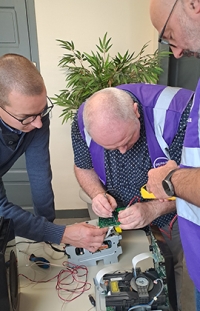
Repair Café
Extending the life of objects
In order to raise awareness of environmental issues and the principle of eco-responsibility, volunteer employees of the Brie Picardie Regional Bank opened a workshop to repair various objects. Extending their lifespan helps to avoid waste and overconsumption. Since the launch of the operation in 2022, accompanied by an association in Amei, eight employees have been hired and one third of the objects presented at the workshop have been repaired.
Découvrez nos derniers articles sur l'économie circulaire :
-
 Crédit Agricole in the circular economyIn a changing world, where the expectations of customers and employees are more geared towards using and reducing the environmental footprint, Crédit Agricole Group entities are getting in step with each other and changing some of their practices.
 -
 Directing demand and behaviour towards sustainabilityAs part of their business, the Group’s entities are developing solutions to promote more responsible consumer demand and behaviour, including through Olinn through CAL&F.
 -
 RecycleMost entities are pursuing an active waste management policy with some original initiatives, including that of Crédit Agricole Italia which, as part of its Newlife programme born in 2018, donates meals not consumed by its employees to charitable associations. Crédit Agricole CIB already provides for the redistribution of foodstuffs not consumed at an event when a call for tenders is made with a caterer.